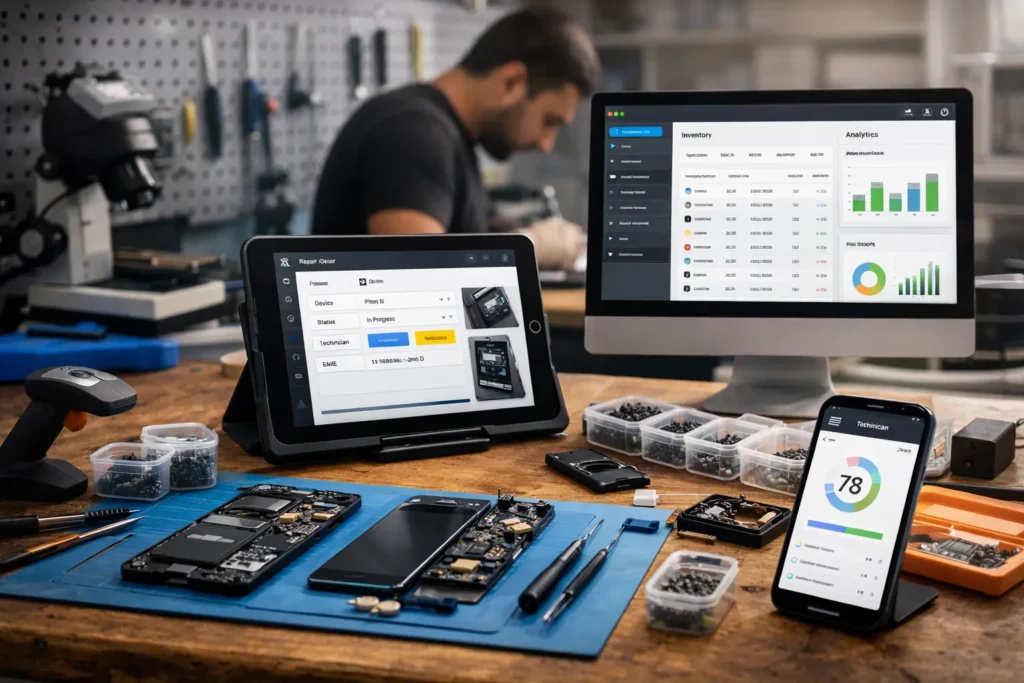
Running a phone repair shop is very different from running a traditional retail store. You are not only selling products but also managing device intake, tracking repair progress, assigning technicians, consuming parts inventory, and maintaining detailed customer history. Because of this complexity, choosing the best POS software for phone repair shops is one of the most important decisions you will make.
If you are evaluating options, this guide explains what features truly matter, why generic systems fall short, and how a repair focused POS supports long term growth.
What Makes a POS System Ideal for Phone Repair Shops
The best POS software for phone repair shops must support structured repair ticket management and device level tracking. A strong system allows you to create repair tickets at intake, assign them to technicians, update repair statuses, and maintain complete repair history within one unified platform. This ensures that no device is misplaced and every repair is traceable from start to finish.
In addition, proper IMEI and serial number tracking is essential. Repair businesses deal with individual devices, not just SKUs. A specialised POS must record device identifiers, prevent duplicates, and maintain accurate history per device to avoid disputes and inventory inconsistencies.
Why Generic POS Systems Fail Repair Shops
Retail POS systems such as Square and Clover are designed primarily for product sales. While they process payments effectively, they lack structured repair workflows. Repair tracking often requires manual notes or external spreadsheets, which increases the risk of errors and operational delays.
Another limitation is inventory integration. Generic systems do not link parts usage directly to repair tickets. As repair volume increases, this disconnect leads to inaccurate stock levels, lost profitability insights, and difficulty scaling operations efficiently.
Repair Ticket Workflow Management
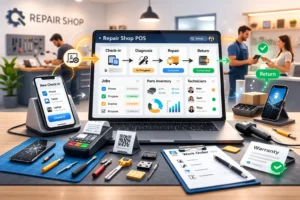
A high quality repair POS system should allow you to manage the full repair lifecycle from device check in to final pickup. Technicians should be able to update repair statuses in real time while front desk staff can instantly view progress without miscommunication.
By centralising repair tracking within the POS, you reduce lost devices, shorten turnaround time, and improve customer confidence. This structure becomes increasingly important as your repair volume grows.
IMEI and Device Level Tracking
Phone repair shops operate at the device level, not just the product level. The best POS software records IMEI numbers and serial numbers while maintaining complete history tied to each device. This is particularly important for refurbished phone sales, trade ins, and warranty tracking.
Accurate device level tracking protects your business from disputes and ensures accountability across staff members. It also simplifies repeat repairs and improves long term customer relationships.
Parts Inventory Integration
Repair profitability depends heavily on parts management. A proper repair POS automatically deducts parts when they are used in a repair and keeps inventory levels accurate in real time. This prevents stockouts and reduces unnecessary overordering.
When parts are directly linked to repair tickets, you gain clear visibility into parts margins and repair level profitability. Without this integration, inventory inaccuracies become inevitable as operations expand.
Technician Performance Tracking
Repair businesses depend on technician productivity and efficiency. The best POS software enables you to assign repairs to specific technicians and monitor performance trends over time. This provides insight into workload distribution and repair turnaround metrics.
With proper reporting, you can identify bottlenecks, reward high performers, and make staffing decisions based on real data rather than assumptions.
Cloud Based Accessibility
Modern repair businesses require flexibility and remote visibility. Cloud based POS systems allow owners to monitor repair statuses, inventory levels, and financial reports from any location. Automatic data backups also ensure that critical repair records are never lost due to hardware failure.
As your business grows, remote accessibility becomes essential for maintaining operational control without being physically present in the store at all times.
Why RepairNest POS Is Built for Phone Repair Shops
When searching for the best POS software for phone repair shops, specialisation is key. RepairNest POS is designed specifically for repair businesses and supports structured repair
Frequently Asked Questions
What is the best POS software for phone repair shops?
The best POS software for phone repair shops is one that includes repair ticket management, IMEI and serial number tracking, integrated parts inventory, technician performance reporting, and cloud based accessibility. Repair specific systems are more suitable than generic retail POS platforms because they are built for service workflows.
Why is IMEI tracking important in a repair shop POS?
IMEI tracking ensures device level accountability. It allows repair shops to maintain accurate repair history, prevent duplicate entries, manage refurbished phone sales, and protect against disputes related to device ownership or service history.
Can Square or Clover handle phone repair shop workflows?
Square and Clover can process payments effectively, but they are retail focused systems. They do not provide structured repair ticket lifecycle management, integrated parts tracking per repair, or detailed technician performance reporting required by repair businesses.
Is cloud based POS better for phone repair shops?
Yes. Cloud based POS systems provide real time updates, remote access to repair tickets and reports, automatic data backups, and easier scalability. This is especially important for repair shops planning to grow or manage multiple locations.
How do I know if my repair shop has outgrown a generic POS?
If you are using spreadsheets to track repairs, struggling with parts inventory accuracy, lacking technician performance visibility, or planning to expand, your repair shop has likely outgrown a generic retail POS system.
What features should repair shop POS software include?
Repair shop POS software should include repair ticket management, IMEI tracking, parts inventory integration, technician assignment and performance tracking, separate repair and retail reporting, cloud accessibility, and secure role based permissions.
workflows, IMEI tracking, integrated parts inventory, technician performance monitoring, and cloud based management.
Unlike generic retail systems, it aligns with how repair shops actually operate, allowing you to manage devices, parts, staff, and reporting within a single platform built for service based businesses.
Final Verdict
The best POS software for phone repair shops is not simply one that processes payments efficiently. It is one that supports repair workflows, device tracking, parts integration, technician performance visibility, and scalable cloud access.
Generic retail POS systems may work temporarily for very small operations, but as repair volume increases they create operational friction. A repair focused POS system provides the infrastructure needed to operate efficiently, reduce errors, and scale confidently.
If your goal is long term growth and operational clarity, choosing a system designed specifically for repair businesses is a strategic investment rather than a simple software choice.