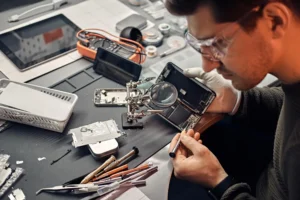
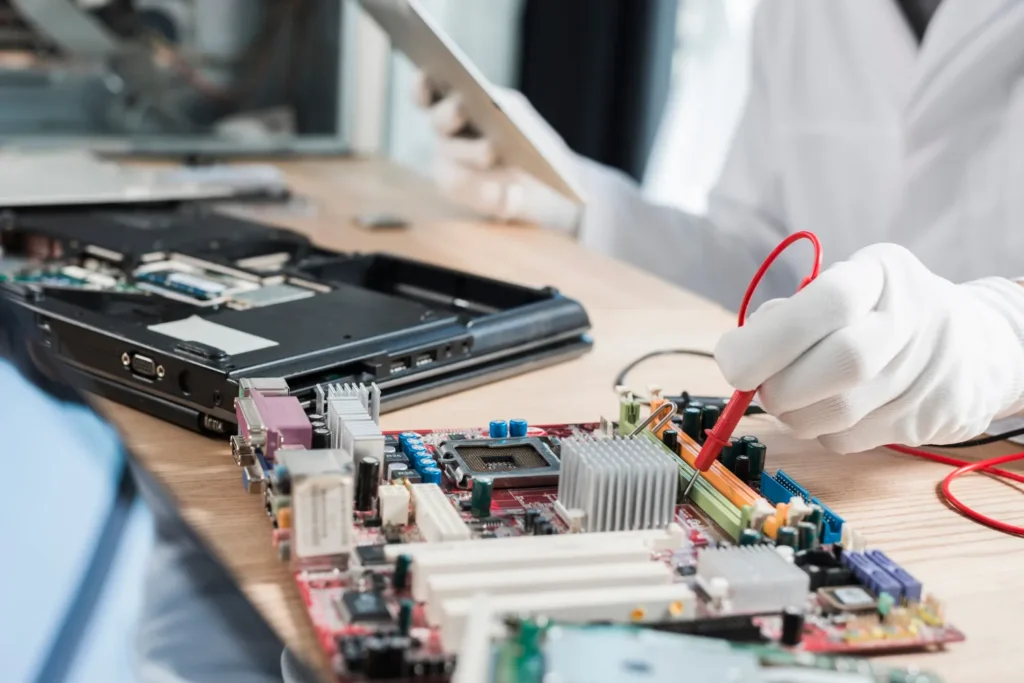
Choosing the right POS system is one of the most important operational decisions a service business can make. While retail stores and repair shops may seem similar on the surface, their workflows are fundamentally different. Retail businesses focus primarily on selling products, while repair businesses manage devices, services, technicians, parts inventory, customer history, and repair timelines all at the same time.
Because of this, many repair shop owners eventually ask an important question: should a service business use a retail POS system or a repair focused POS system?
The short answer is that retail POS systems are designed for transactions, while repair POS systems are designed for operational workflows. Understanding this difference is critical for improving efficiency, scalability, and customer experience.
Understanding the Difference Between Retail POS and Repair POS
A retail POS system is built primarily for product sales. Its main purpose is to process transactions, manage basic inventory, and generate sales reports. Systems like Square or Clover are commonly used in retail environments because they are simple and easy to deploy.
A repair POS system, on the other hand, is designed specifically for service based businesses such as phone repair shops, electronics repair stores, and device service centers. These systems support repair ticket workflows, device tracking, technician assignments, parts usage, warranty management, and service reporting.
Repair Workflow Management
One of the biggest limitations of retail POS systems is the lack of structured repair workflow management. Repair businesses need the ability to check in devices, create repair tickets, assign technicians, track repair statuses, record diagnostics, and maintain complete repair history.
Repair focused POS systems centralise all repair activity within one platform, making workflows more organised and scalable.
Device Level Tracking
Retail stores usually track products through barcodes and inventory quantities. Repair businesses operate differently because every device is unique. IMEI numbers and serial numbers must be tracked accurately to maintain accountability and service history.
Without device level tracking, repair businesses face greater risks of disputes, inventory confusion, and poor service visibility.
Parts Inventory and Repair Integration
Inventory management in repair businesses is far more complex than standard retail inventory. Repair shops consume parts during service jobs, which means inventory needs to update dynamically based on repairs performed.
Repair focused POS systems integrate parts inventory directly into repair workflows, ensuring accurate stock management and better profitability tracking.
Technician Productivity and Performance Tracking
Service businesses rely heavily on technician efficiency and repair quality. Understanding technician productivity is essential for managing workloads, improving turnaround times, and maintaining customer satisfaction.
Repair POS systems allow businesses to assign repairs to technicians, monitor repair completion rates, and analyse turnaround times.
Reporting and Business Insights
Retail POS reporting is generally focused on sales performance and inventory movement. Repair focused POS systems provide deeper insights into repair profitability, technician performance, repair turnaround times, parts usage, and customer trends.
These analytics help service businesses make informed decisions and optimise operations using real business data.
Customer Experience and Service Transparency
Repair customers expect transparency and timely updates. They want to know the status of their repair, estimated completion times, and service history.
Repair focused systems improve communication by maintaining structured repair history and providing clearer visibility into repair progress.
Scalability for Growing Service Businesses
As repair businesses grow, operational complexity increases quickly. More technicians, higher repair volumes, larger inventory requirements, and multiple locations all require structured systems.
Repair focused POS systems are designed specifically for scaling service operations efficiently.
Why Repair Businesses Choose Repair Focused POS Systems
Repair businesses need more than simple transaction processing. They require systems designed around service workflows, operational visibility, and device level accountability.
This is why many growing repair businesses move toward specialised solutions such as RepairNest POS, which is built specifically for repair workflows, technician management, inventory integration, and repair reporting.
Final Verdict
Retail POS systems and repair POS systems serve very different purposes. Retail systems are built to process product sales efficiently, while repair POS systems are designed to manage service based operations from start to finish.
For businesses that rely heavily on repairs, device tracking, technician management, and parts inventory, a repair focused POS provides far greater operational value.