
Introduction: Why Generic POS Systems Fail Cell Phone Repair Shops
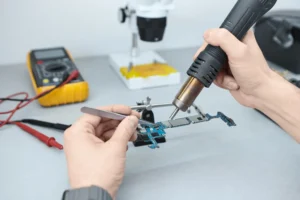
Running a modern cell phone and electronics repair shop in 2026 is vastly different from operating a traditional retail store. While a general retail store simply scans a barcode, accepts payment, and prints a receipt, a repair shop manages complex service lifecycles. You are tracking intake diagnostics, assigning unique IMEI/Serial numbers, managing multi-tier repair statuses, tracking micro-inventory parts (like screen assemblies, flex cables, and logic boards), and communicating constantly with anxious customers.
Attempting to force generic Point of Sale (POS) platforms like Square, Shopify, or Clover to manage a repair workflow leads to operational chaos. Part misplacement, lost repair status tracking, manual SMS notifications, and inaccurate stock counts quickly eat into your bottom line. Without dedicated features like part reservations, pre-repair device condition logs, and integrated diagnostic fees, generic POS systems force repair technicians into a web of third-party spreadsheets and sticky notes.
To scale efficiently, maintain high profit margins, and deliver stellar customer service, you need a specialized point of sale platform built explicitly for device repair operations. In this comprehensive, 2026-updated guide, we evaluate the top repair shop POS software on the market. We break down critical features, detailed workflow mappings, total cost of ownership, and explain how platforms like RepairDesk, CellSmart POS, and the emerging industry leader, RepairNest POS, stack up.
Not sure if you actually need repair-focused software? See our full breakdown of repair focused POS vs generic POS software and repair shop management software vs POS software to find the right fit for your shop.
The Ideal Repair Shop Workflow: A Step-by-Step Breakdown
To understand why specialized POS systems matter, we must map out the daily operational realities of an electronics repair store. A robust POS doesn’t just ring up sales; it orchestrates the entire repair journey.
Step 1: Customer Intake and Digital Waivers
When a customer brings in a shattered iPhone, the first step is intake. A proper repair POS prompts the technician to enter the device’s IMEI or Serial Number. From there, the tech can perform a pre-repair diagnostic checklist (testing cameras, speakers, face ID) directly on a tablet. Crucially, the system then generates a digital liability waiver for the customer to sign, protecting the business from false claims regarding pre-existing damage.
Step 2: Ticket Creation and Part Reservation
Once the device is logged, a repair ticket is created. Here is where generic retail systems fail: a specialized POS allows you to instantly check stock for the specific OEM or aftermarket screen required. If the part is available, it is ‘reserved’ for that specific ticket, preventing another employee from selling that exact screen to a walk-in customer.
Step 3: Repair Status Updates and Automated SMS
As the device moves to the technician’s bench, the repair ticket status is updated from ‘Waiting’ to ‘In Progress.’ When the repair is complete and Quality Assurance (QA) is finalized, the technician updates the status to ‘Ready for Pickup.’ The POS automatically triggers an SMS and email to the customer, drastically reducing phone calls tying up your front desk staff.
Step 4: Micro-Inventory Deduction and Invoicing
When the customer arrives for pickup, the POS automatically calculates the final invoice—factoring in diagnostic fees, labor, the specific cost of the part used, and any associated taxes. Simultaneously, the physical inventory count is permanently deducted, keeping your stock numbers flawlessly accurate.
Critical Features to Demand in a Repair POS (2026 Standards)
As artificial intelligence and automated integrations become standard in retail tech, your repair shop cannot afford to rely on outdated software. When evaluating solutions, demand the following:
-
Advanced IMEI & Serial Number Tracking
Every device that enters your workshop is unique. Your POS must link customer profile data, diagnostic history, warranty details, and specific replacement parts directly to the device’s unique IMEI or Serial Number. This is non-negotiable for handling warranties. If a customer returns two months later claiming a defective screen, a simple IMEI scan should pull up the entire ticket history, verifying exactly who performed the repair and which batch the part came from.
-
Defective Part (RMA) Tracking and Supplier Sync
Repair inventory moves fast and consists of fragile components. Receiving defective screens or batteries from suppliers is an industry reality. A proper repair POS simplifies Return Merchandise Authorization (RMA) workflows. It should track which parts are pending return to the supplier, ensuring you don’t lose money on defective inventory.
-
Multi-Store Management and Centralized Reporting
If you operate multiple locations or plan to expand into a franchise, your POS system must provide real-time visibility into inventory movement, store sales performance, and technician productivity across all branches from a single unified login. You should be able to transfer a logic board from Store A to Store B with a few clicks, automatically updating the centralized inventory count.
-
Employee Management and Commission Tracking
Retaining top technicians requires clear compensation structures. Look for software that tracks individual employee repair times, manages shift scheduling, and automatically calculates performance-based commissions based on the number of devices repaired or accessories up-sold.
Deep Dive: Comparing the Top Repair Shop POS Platforms
Let’s explore the heavyweights in the cell phone repair software industry, examining their strengths, weaknesses, and pricing structures.
Competitor 1: RepairDesk
RepairDesk is a veteran cloud-based point-of-sale software designed for various repair stores. It boasts a powerful suite of features including unlimited ticketing, built-in CRM dashboards, appointment scheduling, and franchise management capabilities. Their inventory management system is robust, allowing for detailed stock alerts and vendor purchase order integration.
Pros: Extensive feature set, excellent for multi-store operations, strong integration with third-party tools (like accounting software), and detailed business reporting.
Cons: The platform can be overwhelming for smaller, single-store operations. Their pricing is tiered, starting around $35 to $99/month, but accessing advanced features (like API integrations and multi-user scaling) requires higher-tier plans that can reach up to $350/month.
Competitor 2: CellSmart POS
CellSmart POS is highly specialized, built specifically for cell phone and electronics retailers. They excel in combining repair workflows with traditional wireless retail features, such as layaway management and bill payment processing. Their system includes unique tools like Android pattern capture, loaner phone tracking, and dedicated Spanish language support.
Pros: Deeply ingrained in the wireless retail niche, 24/7 technical support, excellent loaner phone and layaway modules, and automated daily sales alerts.
Cons: The user interface may feel less modernized compared to newer cloud platforms. It is heavily focused on cell phone retail, which might not perfectly translate if your shop diversifies heavily into computer or drone repair.
Competitor 3: Generic Retail POS (Square / Shopify)
Many new shop owners start here due to low entry costs. These platforms are phenomenal for standard retail (selling phone cases, chargers) but lack repair functionality entirely.
Pros: Beautiful hardware, low monthly software costs, seamless eCommerce integrations.
Cons: Zero repair ticketing. No IMEI tracking. No diagnostic workflows. Repair shops using these systems must duct-tape together third-party apps, spreadsheets, and manual texting—ultimately costing more in lost labor hours than the software saves.
Why RepairNest POS is the Ultimate Choice for 2026
While legacy tools have paved the way, RepairNest POS was engineered from the ground up to solve the friction points of modern repair businesses. It acts as the perfect middle ground: offering the enterprise-grade power of platforms like RepairDesk, but with a streamlined, intuitive interface that technicians can master in minutes.
Here is why aggressive, growth-focused shop owners are migrating to RepairNest POS:
- Seamless Repair Intake & Digital Signatures: Capture customer waivers, terms of service, and baseline pre-repair diagnostic checks digitally on any tablet, protecting your store from liability.
- Smart Parts Auto-Deduction & Reservation: When a technician attaches an iPhone screen to a ticket, RepairNest automatically updates your central inventory and reserves the part, eliminating double-selling.
- Native Multi-Channel Automated SMS: Unlike systems that charge extra for SMS integrations, RepairNest natively handles automated status updates, keeping customers informed and your phone lines clear.
- Automated Growth & Review Booster: RepairNest automatically requests Google reviews via SMS once a customer picks up their device, systematically boosting your local GEO visibility and Google Maps ranking.
- Transparent Pricing & Total Cost of Ownership: RepairNest offers scalable, transparent pricing models without hidden fees for basic modules, ensuring that as your shop grows, your software costs remain predictable.
At-A-Glance: Feature Comparison Matrix
| Core Capability | RepairNest POS | RepairDesk | CellSmart POS | Generic (Square) |
| IMEI / Serial Tracking | Fully Automated | Advanced | Highly Focused | None |
| Ticketing Workflow | Dynamic & Intuitive | Comprehensive | Standard | Manual Workaround |
| Automated SMS Alerts | Native | Add-on / Supported | Supported | Third-party App |
| RMA / Defective Parts | Built-in Auto-RMA | Supported | Basic | None |
| Ease of Setup / UI | Modern & Fast | Steep Learning Curve | Traditional UI | Very Simple |
Buyer’s Checklist: Evaluating Your Next POS System
Use this quick checklist when demoing software for your shop:
- Does the system allow for custom pre-repair and post-repair diagnostic checklists?
- Can I capture digital signatures directly on the point-of-sale screen?
- Does the inventory system track parts at the micro-level (e.g., separating OEM vs. Aftermarket screens)?
- Are automated text messages included, or do they cost extra per message?
- Does the software integrate seamlessly with standard receipt printers and cash drawers?
- Is there a smooth workflow for accepting partial payments or diagnostic fees?
Final Thoughts: Investing in Operational Sanity
Transitioning to a new POS system is a significant operational shift, but the cost of remaining on generic software or disjointed spreadsheets, is far higher. Lost parts, disgruntled customers waiting on uncommunicated updates, and muddled warranty claims drain your profitability.
By investing in a robust, repair-first software like RepairNest POS, you are not just buying a cash register. You are implementing an automated management system that guards your inventory, delights your customers with professional communication, and ultimately allows you to scale your business beyond a single storefront.