A busy store is not always a profitable store. Plenty of cell phone stores and repair shops have customers walking in all day and still find the bank account thin at the end of the month. Most of the time the fix is not more traffic. It is better habits with the customers and the cash you already have.
Here are six practical ways to increase profit at a cell phone store or electronics repair shop, from owners who work the counter every day.
Quick Answer
To increase profit at a cell phone store or repair shop: (1) control your cash flow and remember that revenue is not profit, (2) charge fair prices so customers come back, (3) track every repair with IMEI numbers, condition notes and turnaround goals, (4) upsell and cross-sell when customers visit, including for bill payments, (5) make customer retention your top priority, and (6) turn window shoppers into buyers with layaway and value-based offers instead of cash discounts.
1. Control Your Cash Flow
The money in your register at the end of the day is not your profit. Out of every sale you still have to pay for the phone or part you sold, rent, payroll, utilities, card fees and taxes. For many small stores, a large share of revenue is already spoken for before the owner sees a dollar. If you treat revenue like profit, you spend money you don’t really have.
A few habits keep cash under control:
- Know your real margin on each product and repair. A $200 phone sale with a $170 cost is a $30 sale, not a $200 one.
- Buy with a plan. Don’t let a supplier deal fill your shelves with stock that sits for months. Money tied up in slow inventory is money you can’t use.
- Keep cash on hand. Set aside a reserve for slow weeks, a surprise bill or a good deal on fast-selling stock.
- Look at your numbers every day. A day-end report and a monthly profit and loss report tell you quickly when something is off.
2. Charge the Right Price
It is tempting to add a little extra to every bill. A charge here, an add-on there. It may bring in more money today, but customers notice, and a customer who feels overcharged doesn’t come back or send their friends.
Charge a fair price for good work and treat people like friends, not one-time transactions. Explain what they are paying for. Recommend only what they actually need, and don’t push products they don’t want. A customer who trusts you comes back for their next repair, their next phone and their family’s phones too. That repeat business is worth far more than one inflated bill. If you need help setting prices, see our guide on how to price phone repairs.
3. Track Your Repairs More Effectively
Repairs are where many shops lose money without noticing: devices that sit on the shelf too long, jobs nobody follows up on, disputes about a scratch that “wasn’t there before”. Good tracking fixes most of this.
- Record the IMEI or serial number on every ticket. It proves which device is which and stops mix-ups.
- Note the condition and take photos. Photos of the front, back and sides at check-in end most “you scratched my phone” arguments.
- Set goals. Decide how many repairs you want to complete each day or week, how fast a repair should be returned to the customer, and how long a device is allowed to stay in your store before someone follows up.
- Keep every update on the ticket so anyone on your team can answer “Is my phone ready?”
Proper repair ticket management turns these goals into a daily routine instead of sticky notes. For a step-by-step check-in process, read our repair intake checklist.
4. Upsell and Cross-Sell in the Store
Every visit is a chance to help the customer with something else, even when they came in for something small. Bill payment is the best example. You make very little on a bill payment because the margin is low. But it brings the customer to your counter every month, and that visit is the real value.
While you take the payment, ask, “Can I see your phone for a second?” If the screen protector is cracked or missing, offer a new tempered glass. Suppose you normally sell it for $25. For this customer you can say, “Since you pay your bill with us, I’ll give you 50% off today.” The customer gets a great deal, and because tempered glass costs very little, you still make a good profit on a sale that would never have happened otherwise.
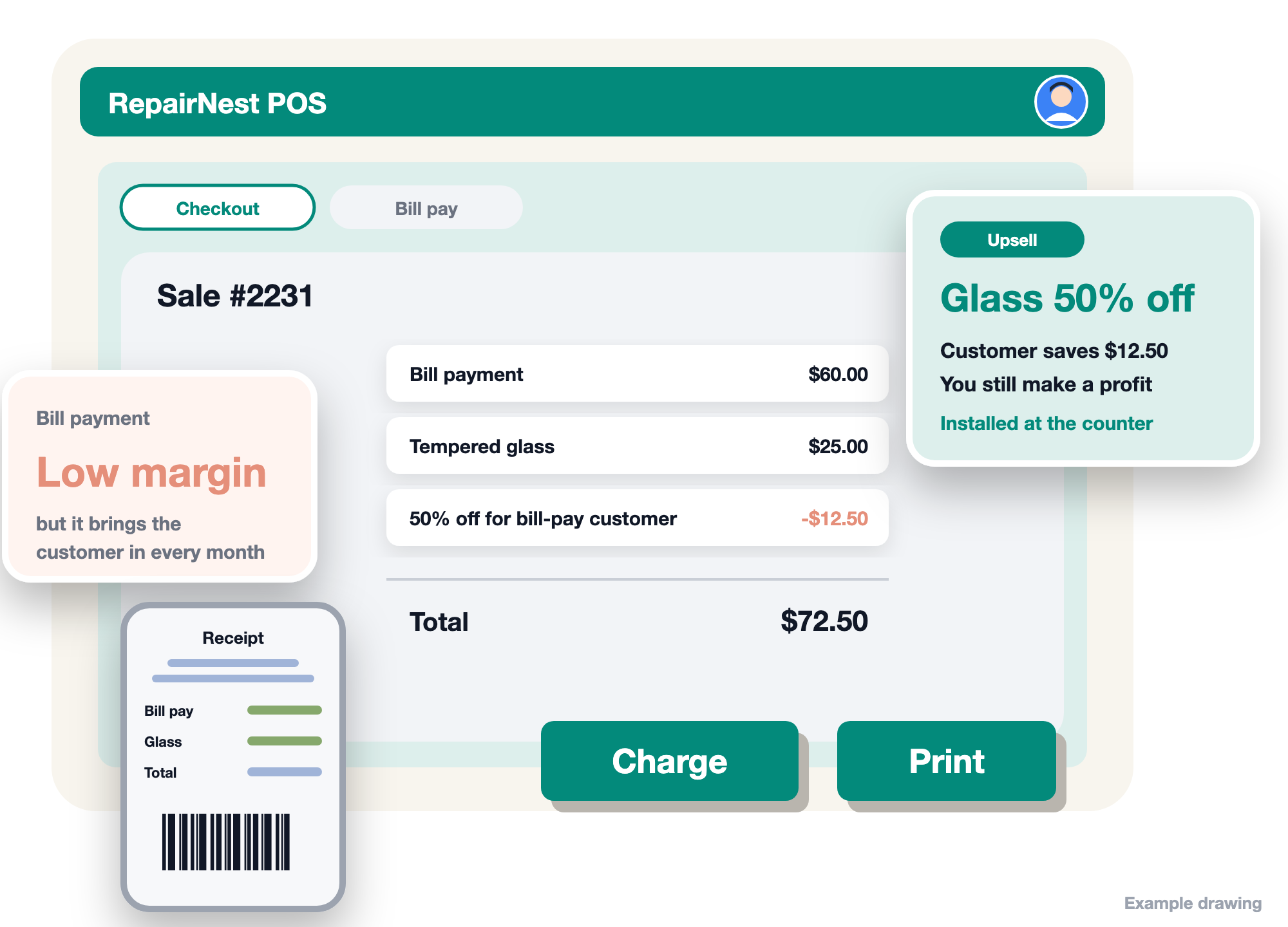
That is upselling: offering something useful to a customer who didn’t come in to buy it. Do it by talking to people, not by pushing. A case for a new phone, a charger for a customer whose cable is fraying, a battery replacement for a phone that won’t last the day. Small sales like these add up quickly. Always ring them up properly so you can see in your reports which add-ons sell best.
5. Prioritize Customer Retention
Want to spend less on marketing and earn more from every customer? Put customer retention at the top of your list. Keeping a customer you already have costs much less than finding a new one.
- Greet every customer the moment they walk in.
- Learn their name and phone number and save them in your system, so their purchases and repairs are in one place.
- Use their name the next time they visit. People pay attention to their own name: a brain imaging study published in Brain Research found that hearing your own name triggers a different response in the brain than hearing other people’s names (Carmody and Lewis, 2006). Being greeted by name makes customers feel known.
- Stay connected. With customer records in your software, you can remind people about upgrades, repairs and offers.
- Offer a loyalty points program and give them something other stores in your area don’t.
- Install accessories for them. Put on the case and the tempered glass yourself, and set up the new phone at the counter. It takes a few minutes, shows the customer a personal level of service, and builds trust that brings them back.
6. Turn Window Shoppers Into Buyers
A window shopper wants something but doesn’t have the money right now. They look around, compare prices, and often leave and buy somewhere else later. Don’t let them walk out empty-handed.
Find out what they want and be friendly about it. Then offer to reserve it with layaway. Take a small deposit, say $10 or $20, and hold the item for them. When payday comes, they come back to you, because they already have money invested in your store.
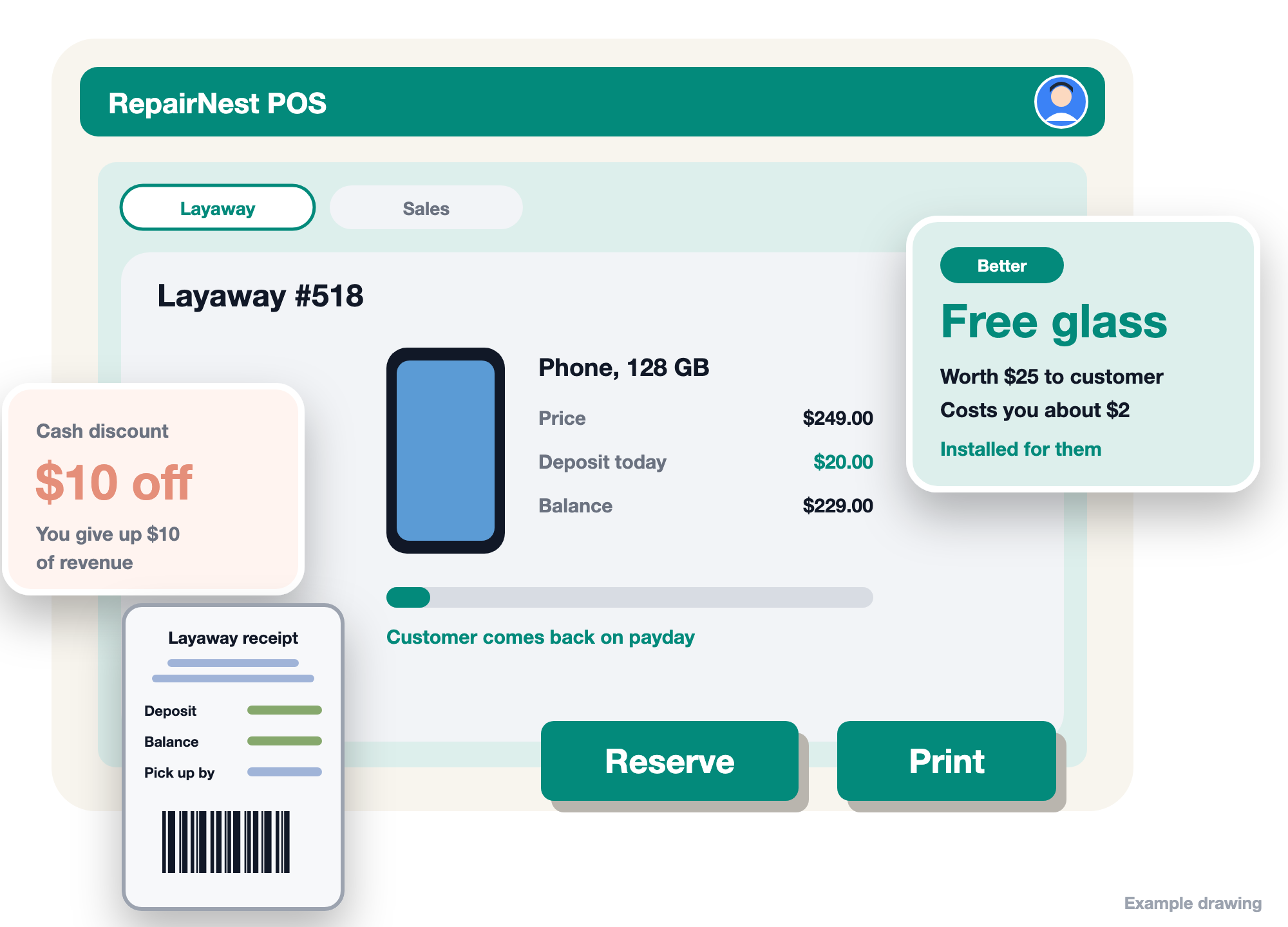
If you want to sweeten the deal, give value instead of a cash discount. A $10 discount costs you $10 of revenue. A free tempered glass that you sell for $25 might cost you about $2. The customer feels they got $25 of value, and you keep more of the sale. (These are example figures; use your own costs.) The same idea works for retention: a free accessory, installed for them at the counter, feels more personal than a few dollars off.
Frequently Asked Questions
What is a good profit margin for a cell phone store?
It depends on your mix. New phones usually carry thin margins, while accessories and repairs carry much higher ones. That is why stores that sell more accessories and repairs alongside phones tend to be more profitable. Track your margin by category so you know where your profit really comes from.
Is bill payment worth offering if the margin is so low?
Yes, for most stores. Bill payment brings regular customers to your counter every month. The profit comes from the accessories, repairs and upgrades you sell during those visits.
How do I upsell without annoying customers?
Offer only what fits the customer’s phone and situation, explain why it helps, and make it easy to say no. A friendly, honest offer feels like service, not sales pressure.
What is layaway and how does it help a phone store?
Layaway lets a customer reserve an item with a small deposit and pay the rest over time. It turns a “maybe later” into a commitment, and the customer comes back to your store to finish paying instead of buying elsewhere.
How RepairNest POS Helps You Grow Profit
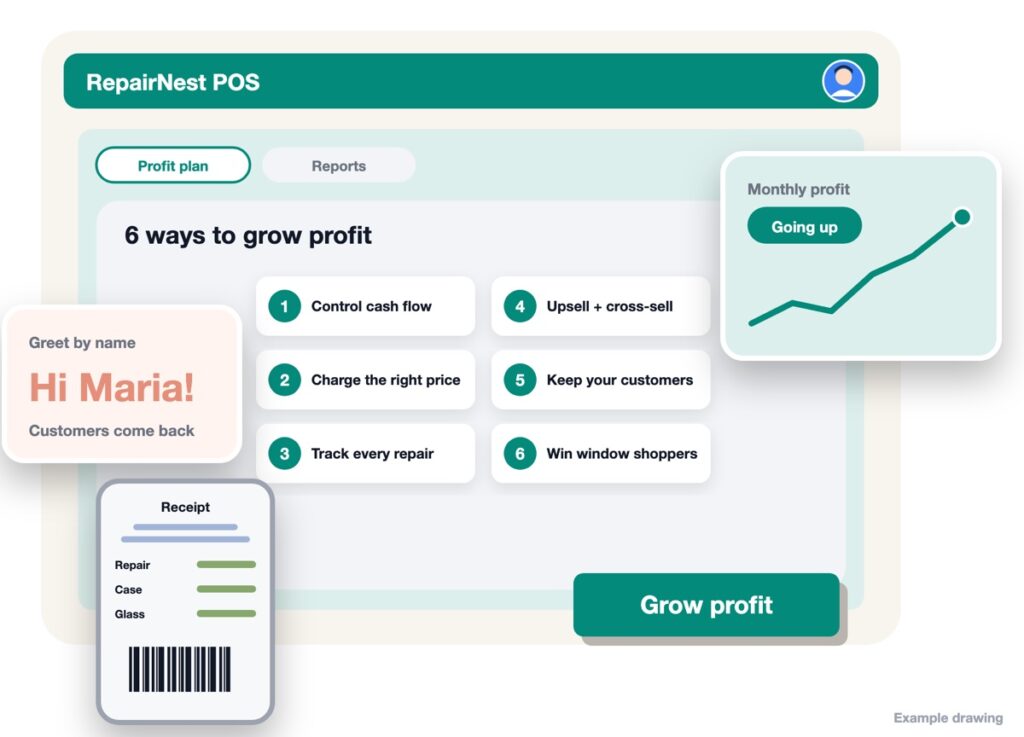
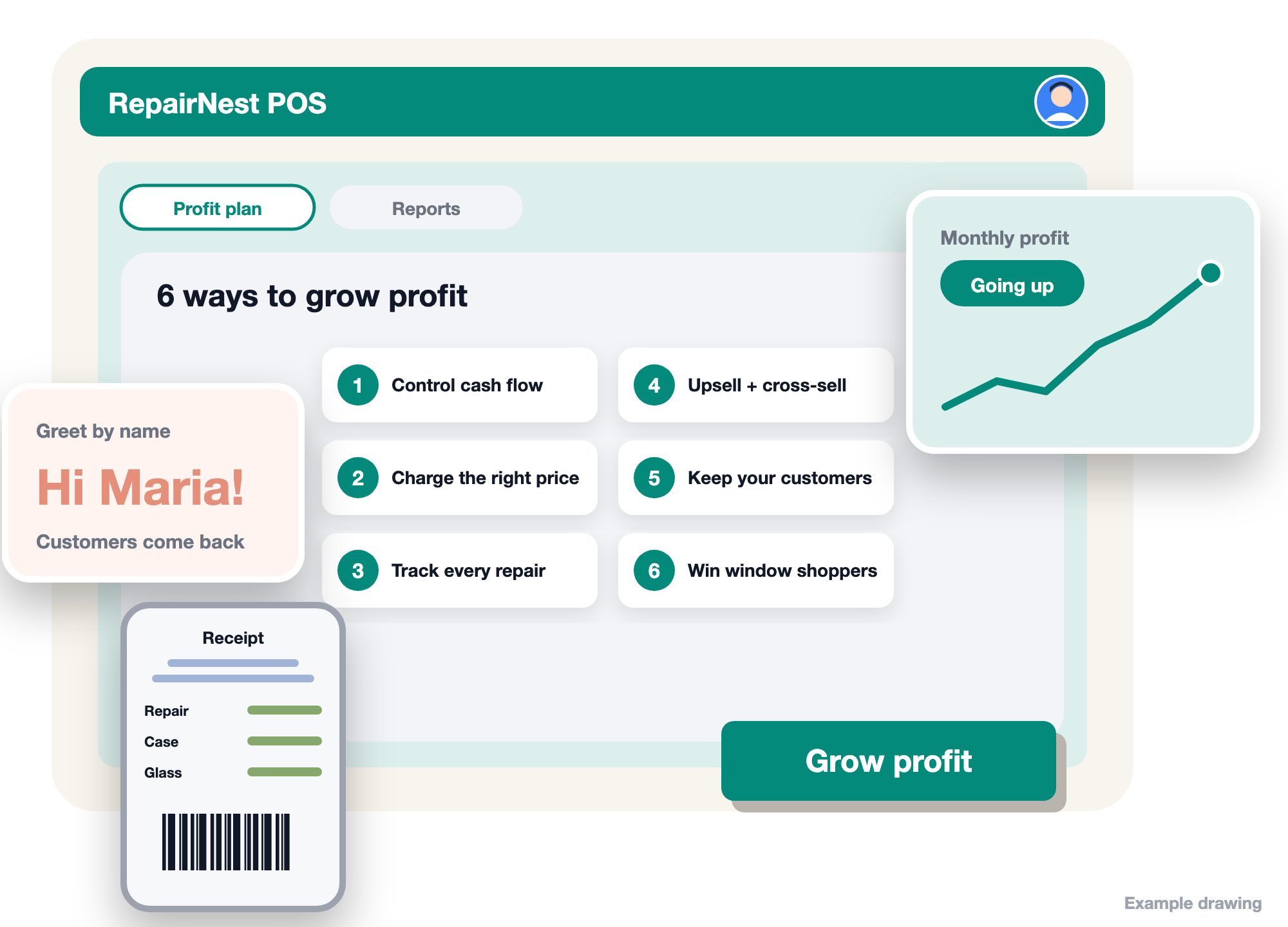
RepairNest POS is built for cell phone stores and repair shops. It brings repair tickets with IMEI and serial tracking, phone and accessory sales, inventory control, layaway and bill payment into one system. Customer records keep every purchase and repair together, and loyalty points help bring customers back. Day-end and profit and loss reports show what is really making you money, and with the RepairNest POS owner app you can check your stores from your phone.
Try RepairNest POS yourself, book a demo, or see the pricing page.